
 EN
EN
 CN
CN
 fr
fr es
es ar
ar ru
ru de
de pt
pt tr
tr vi
vi it
it ja
ja ko
ko hi
hi

Why MnO Content Below 60% Fails Your Ceramic Glaze — and the Supplier Specs You Should Be Demanding
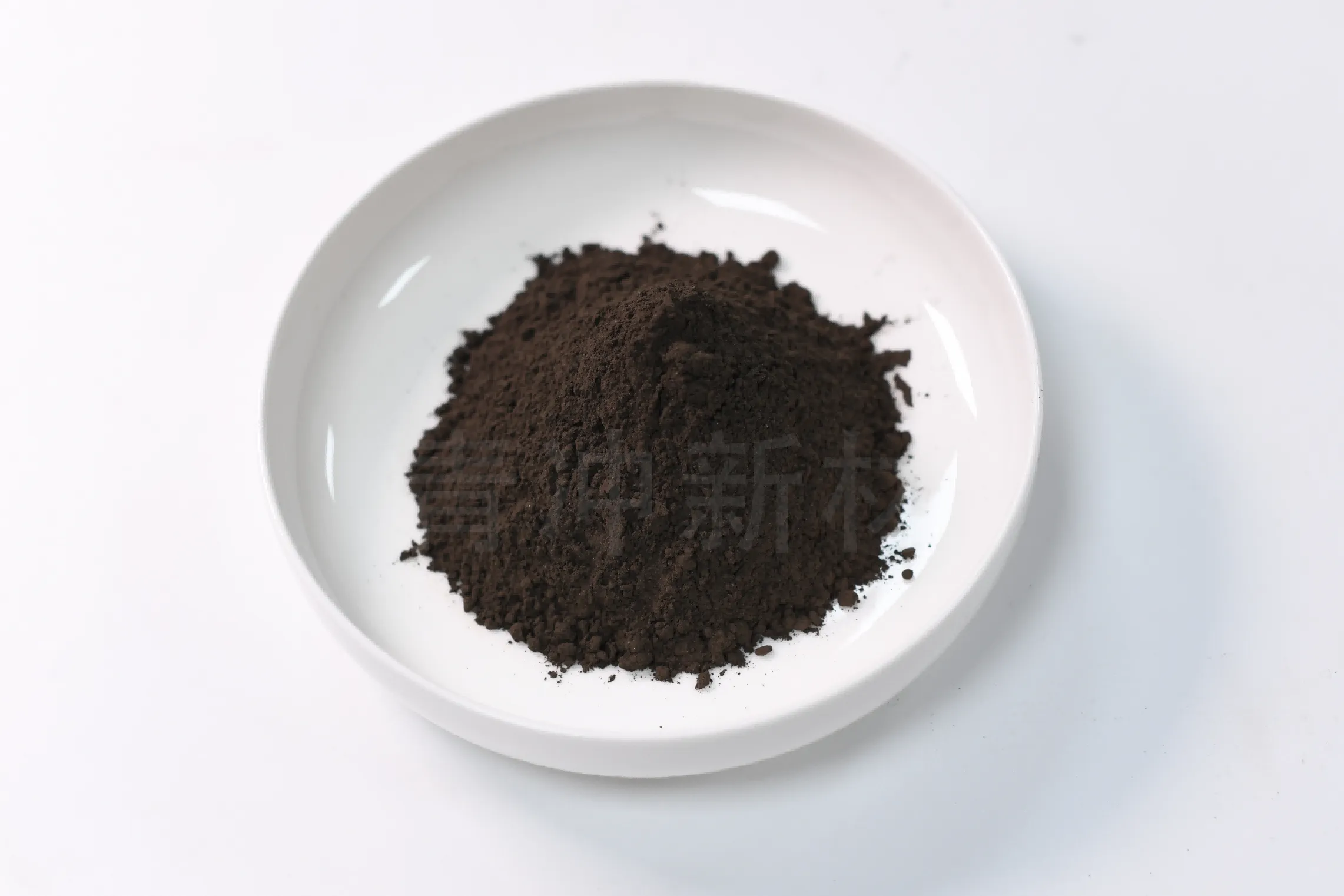
A ceramic glaze calibrated around manganese oxide powder with 60% minimum MnO is not receiving the same raw material when a lot arrives at 55% or 58%. Color strength, addition cost, melt balance, and defect risk all move because less active MnO enters the batch and more unidentified material takes its place. That does not mean every glaze requires a universal 60% grade. It means a plant that approves 60% minimum MnO must reject or deliberately reformulate a lower-assay lot. The real procurement task is to control both the MnO and everything in the remaining balance.
First, Define What the 60% Number Means
For this discussion, 60% means the guaranteed mass fraction of MnO in the supplied powder. It is not elemental manganese. Pure MnO is about 77.5% Mn by stoichiometry, so a commercial material at 60% MnO would contain roughly 46.5% Mn if all measured Mn were present as MnO. QingChong's current ceramic-use specification follows that relationship with MnO at 60% minimum and Mn at 46% minimum.
The two guarantees should be checked together. MnO assay controls how much target oxide is introduced, while elemental Mn provides a useful cross-check. A COA that reports only total Mn leaves the oxidation state and phase distribution unclear; a COA that reports only MnO without a stated method makes comparison between suppliers difficult.
Why a Below-Spec Lot Breaks the Glaze Calculation
Assume a body glaze was validated with 2.00 kg of a 60% MnO material per metric ton of wet glaze. That addition supplies 1.20 kg of MnO. Replacing it kilogram-for-kilogram with a 55% lot supplies only 1.10 kg: an 8.3% active-oxide shortfall. Restoring the original MnO input requires about 2.18 kg, or 9.1% more powder.
That correction changes more than colorant cost. It also increases the amount of the non-MnO balance entering the glaze. If the additional fraction contains iron, silica, alumina, calcium, magnesium, alkalis, moisture, or unreacted mineral phases, the adjustment can shift color, gloss, melt fluidity, suspension behavior, and fired texture. A buyer cannot solve this risk by increasing the addition rate unless the balance is characterized.
Purchasing rule: normalize quotations to cost per kilogram of guaranteed MnO, then add the cost of extra testing, dosing, milling, and rejected production. Price per ton alone rewards dilution.
The Missing 40% Is Part of Your Glaze Formula
A 60% MnO product is already a composite industrial raw material, not pure reagent MnO. The remaining fraction is not automatically harmless filler. Its chemistry may contribute colorants, network formers, fluxes, refractory phases, soluble salts, or loss on ignition. When the MnO assay falls, that balance grows and gains more influence over the fired result.
Iron-bearing phases can strengthen or dirty brown tones. Silica and alumina can change melt development and viscosity. Calcium, magnesium, sodium, and potassium can alter flux balance. Moisture and volatile material distort dry-weight dosing and may affect slurry consistency. Different manganese oxide phases can also respond differently during firing. The point is not that each impurity always creates a defect; it is that unmeasured variability removes process control.
- Demand a major-oxide profile rather than an unexplained 'balance.'
- Set limits for chemistry known to move your glaze, not only generic purity.
- Use lot-to-lot variation limits in addition to one-sided maximums.
- Require change notification for ore source, beneficiation, milling, or blending changes.
Particle Size Can Defeat a Chemically Acceptable Lot
Assay does not describe how the powder disperses. Coarse particles, broad distribution, or hard agglomerates can leave specks, streaks, incomplete dissolution, filter residue, or uneven color strength. Very fine material may disperse well but increase dusting, water demand, viscosity, and handling losses. The acceptable window depends on whether the plant ball-mills, spray-applies, rolls, dips, or passes glaze through a fine screen.
A single statement such as 'below 250 micrometers' is a useful coarse ceiling but not a production-ready particle specification for a sensitive surface glaze. Ask for D10, D50, and D90 by a named method, plus wet-screen residue at the plant's control mesh. Also define the condition of the test: dry or dispersed, dispersant used, sonication, and whether agglomerates are broken before measurement.

Supplier Specifications Ceramic Buyers Should Demand
Write the purchase specification around consequences in the glaze line. The exact limits must come from plant trials, but the following fields prevent the most common information gaps.
| Specification | Why it matters | What to require |
|---|---|---|
| MnO assay | Sets colorant input and normalized cost | Minimum value, test method, basis, and lot result |
| Elemental Mn | Cross-checks assay and formulation input | Minimum or controlled range with analytical method |
| Major oxides | The balance can move color and melt behavior | Fe, Si, Al, Ca, Mg, Na, K and other plant-relevant components |
| Phase identity | Total Mn does not define manganese oxide phases | Agreed identification method when phase variation matters |
| Particle distribution | Controls dispersion, specking, residue, and viscosity | D10/D50/D90 plus wet-screen residue and method conditions |
| Moisture and LOI | Affect dry dosing, storage, and volatile input | Maximum moisture, LOI range, temperature, and method |
| Trace contaminants | Support safety, market, and product requirements | Pb, As, Cd and any application-specific regulated elements |
| Physical handling | Influences dosing, dust, segregation, and storage | Bulk density, packaging, caking condition, and shelf life |
A COA Is Useful Only When the Method Is Defined
Numbers from different laboratories are not automatically comparable. The RFQ should state sampling practice, sample preparation, digestion or fusion route, instrumental method, calibration basis, reporting units, and rounding rules. For MnO, clarify whether the result is a direct chemical determination, a calculation from total manganese, or another procedure. Those routes can answer different questions.
Require a unique lot number, manufacturing date, representative test result, approval signature, and traceability to the shipment. Agree on retained samples and a dispute laboratory before the first commercial delivery. For recurring supply, review control charts or recent lot history. A minimum of 60% is more credible when the process runs comfortably above the limit than when every COA lands exactly on it.
Qualify the Material in the Glaze, Not Just the Laboratory
Incoming chemistry screens the powder; fired validation proves process fit. Start with identity, MnO and Mn results, moisture, major oxides, and particle distribution. Then compare a candidate lot with the approved reference in the actual base glaze. Keep milling, specific gravity, viscosity, application weight, firing curve, atmosphere, and cooling schedule controlled.
Evaluate color instrumentally where possible, but do not stop at a single color value. Record gloss, opacity, specking, pinholes, crawling, blisters, surface texture, settling, screen residue, and slurry aging. Test at the center and edges of the normal firing window. A material that matches one laboratory tile but fails when application weight or kiln temperature moves slightly is not robust enough for routine production.
- Use an approved retained lot as the reference, not a memory of the target color.
- Run equal-powder and equal-MnO comparisons to separate assay from impurity effects.
- Define pass/fail criteria before viewing the fired panels.
- Scale from lab to pilot and production only after the data agree.
When a Grade Below 60% Can Still Be Used
A lower-assay material is not automatically unusable. It can be a deliberate grade if its complete chemistry and particle behavior are controlled, the recipe is formulated for that grade, fired performance is validated, and the delivered cost remains attractive after dose correction. What fails is silent substitution: treating a 55% lot as though it were the approved 60% minimum material.
Manage a lower grade under its own material code, recipe, COA limits, reference tile, and change-control record. Do not mix it into inventory labeled for a higher specification. This separation protects traceability and prevents operators from applying the wrong addition factor.
FAQs
Does MnO below 60% always cause a visible glaze defect?
No. The result depends on the formula, dose, composition of the balance, dispersion, and firing. However, a lot below an approved 60% minimum is nonconforming and should not enter production without technical review and reformulation.
Is elemental manganese enough for supplier approval?
No. Total Mn helps confirm manganese input but does not fully describe MnO assay, manganese oxide phases, major impurities, moisture, or particle behavior. Use it as one part of a broader specification.
Can we compensate for 55% MnO by adding more powder?
Only after the non-MnO balance has been characterized and the adjusted formula has passed slurry and fired tests. Dose correction restores target MnO but also adds more of every other component.
What is the most important physical specification?
There is no universal single number. For many glaze lines, D10/D50/D90 and wet-screen residue together are more useful than a broad maximum size because they reveal distribution, coarse tails, and agglomerate behavior.
The Bottom Line
A 60% minimum MnO specification is a process boundary, not marketing decoration. Falling below it reduces active oxide, changes corrected dosing, increases the unknown balance, and invalidates a glaze qualified around the higher grade. Demand chemistry, particle, method, traceability, and fired-performance controls together. That is how purchasing protects color consistency instead of discovering raw-material variation after the kiln.
Request a Ceramic-Grade MnO Qualification Package
Send QingChong your validated MnO and Mn limits, major-oxide controls, particle requirements, glaze process, firing window, annual volume, and packaging needs. Request current specifications, representative COAs, method details, and a sample for equal-powder and equal-MnO testing.