
 EN
EN
 CN
CN
 fr
fr es
es ar
ar ru
ru de
de pt
pt tr
tr vi
vi it
it ja
ja ko
ko hi
hi

Why Manganese Sand Filter Beds Cake, and How to Detect It Before a Shutdown
An early-warning guide for plant operators, EPC teams, and water-utility engineers
A manganese sand bed cakes because the iron and manganese it removes do not stay loose in the voids. Across many service runs, the oxidation products bind the grains into crusts and mudballs that an ordinary backwash can no longer break. The process is slow, and that is the useful part: it gives four independent warnings, a drifting clean-bed differential pressure, gradually worsening effluent, an abnormal backwash discharge, and crusting or mudballs at the bed surface. Detect caking before a shutdown by trending all four against your own commissioning baseline and reacting when two of them move together.
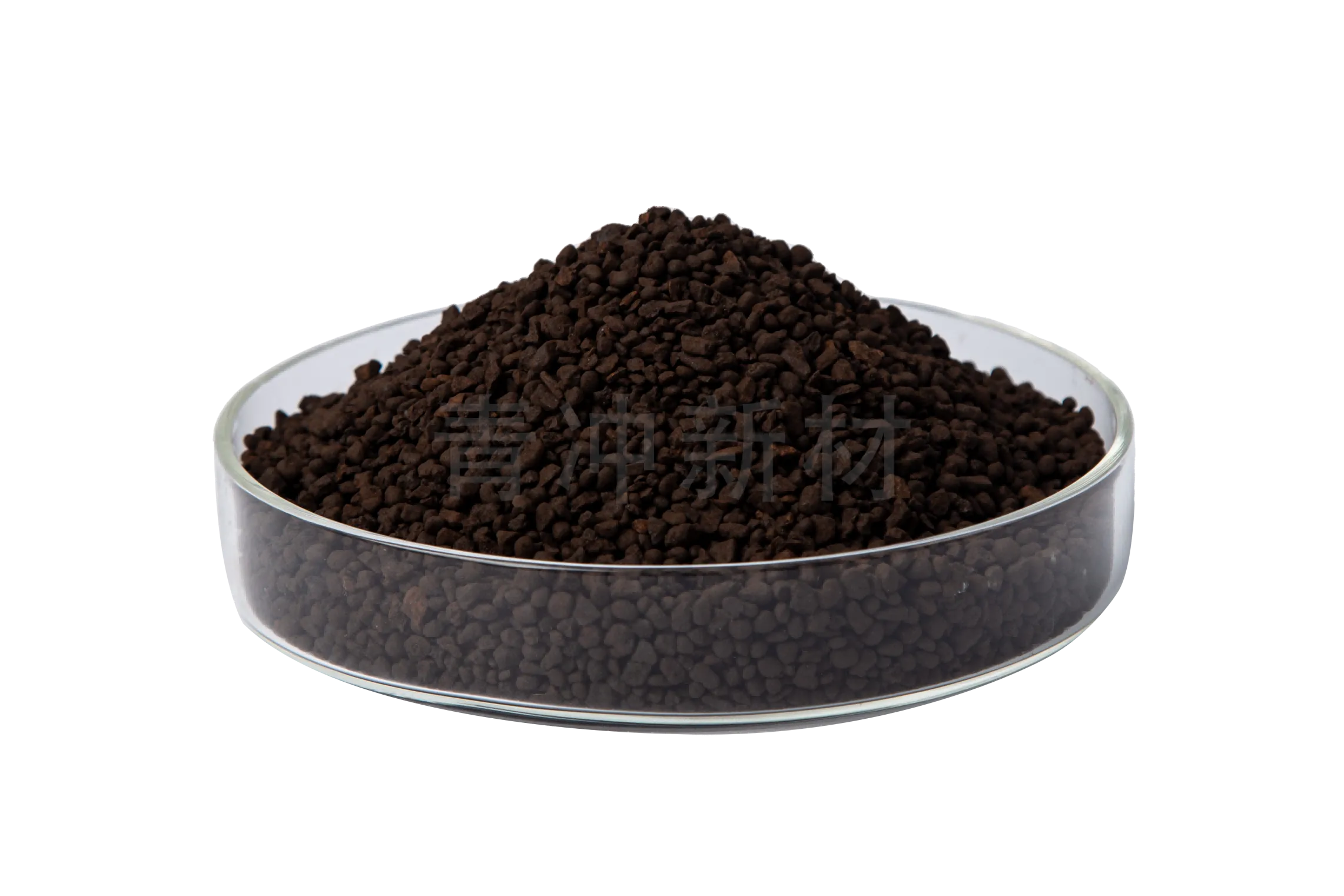
Why a manganese sand bed cakes
In an iron and manganese removal filter, the bed is both a reaction surface and a solids collector. QingChong's manganese filter media is processed natural manganese ore with MnO2 contents from 35% to 90%, which oxidises soluble Fe2+ and Mn2+ into insoluble forms the bed filters out. The grains that make the reaction possible also capture its products and fill the voids water must pass through.
Caking is more than accumulated dirt; it is the cementation of grains. Four binding agents do most of the damage: ferric hydroxide and manganese oxide precipitates, carbonate scale where hardness and pH favour it, biofilm and organic matter that act as glue, and fines from media attrition or the raw water. Rising pressure contributes too, since a loaded bed compacts and presses grains into contact until loose deposits harden.
The first operational form is a surface crust. The EPA water treatment manual on filtration describes how solids and sand at the top of a bed are cemented into a compact crust that then cracks and sinks into the expanded bed during backwashing instead of breaking up. Buried pieces grow into mudballs. Kurita's field guidance adds the operator's view: weak backwashing coats grains, rising pressure drop presses them together, and the mudballs sink to the support gravel, where a normal wash cannot remove them.
The four signals that warn you first
Each family develops over dozens of runs, so it can be trended. The table shows what to log; the sections below explain how to read each signal.
| Signal to log | Early warning | Progressing to compaction |
|---|---|---|
| Differential pressure | Clean-bed baseline creeps up; runs get shorter | Terminal pressure reached faster; baseline keeps rising |
| Effluent quality | Noisier first-rinse sample; shorter runs at the same quality | Iron, manganese or turbidity near the plant limit |
| Backwash discharge | Discharge clears faster and is lighter in colour | Little red-brown mud; fine black sand in the drain |
| Bed surface | Uneven boils or dead zones during the wash | Hard crust, cracks, visible mudballs |
Differential pressure: watch the baseline, not the alarm
The first sign is rarely one high reading. It is the clean-bed pressure, taken right after a good backwash, creeping upward run after run. QingChong's published guidance uses roughly 0.5 bar above the clean baseline as a trigger; commissioning data should set the value. A rapid rise points to solids loading, while a low or falling pressure with poor effluent points the other way, to channeling that lets water bypass the bed. Compare readings at equal flow and temperature, since both shift the value.
Effluent quality: read the trend, not the limit
Track iron, manganese and turbidity against the plant limit, and record how long each filter runs before it is reached. Shortening run length at unchanged water quality is an early compaction signal. Pair dissolved and total metal samples to separate particulate carryover, which points to the bed and its hydraulics, from dissolved breakthrough, which points to oxidation or regeneration. Log the first-rinse sample too, since a repeatable start-up spike often appears first.
Backwash discharge: the waste stream is a test result
Backwash water is the only sample of what the bed holds. Watch its colour and how long it stays dirty, and check the drain for fine black sand. Caking shows up as a discharge that clears faster and carries less colour than the baseline, because the bed is releasing fewer solids. A violent but short burst, or sand in the drain, points instead to an excessive backwash rate and possible media loss. Reduced drain flow or a rising sump can cut the wash short.
Mudballs and surface crust: inspect earlier than you think
You do not need to open the vessel for a first read. During backwash, an uneven surface, a stationary zone, or a boil confined to one area indicates dead zones or localised cementation. Confirmation needs entry: measure bed depth, and look for a hard top crust, cracks, and mudballs. A field test helps: rub a sample in clean water, and active media leaves a red-brown slurry while cemented or stripped grains stay hard and grey.
Turn the signals into a pre-shutdown check
Run the four checks on a fixed rhythm and plot them against the commissioning baseline, not a generic number. One drifting signal deserves a note. Two moving together, such as a rising clean-bed baseline with a shortening run, justify action before the filter fails: re-verify backwash rate, expansion, duration and distribution, confirm oxidant and pH at the filter inlet, and check the drain path. Set the terminal differential pressure, effluent limit and maximum run time as stop points, and treat the first reached as the trigger. Bed depth, crust severity and underdrain state need isolation and a confined-space entry; the signals exist to turn that into a planned task.
The trade-off: adding flow or time to the backwash is not a cure for caking. A wash that is too weak leaves solids between the grains; one that is too strong lifts media, disturbs support gravel and wastes treated water. Once deposits have cemented, ordinary fluidization will not break them.
Recover or replace: the decision rule
Early cementation can sometimes be reversed. Mechanical agitation of the expanded bed, air scour where the underdrain allows it, and targeted chemical cleaning have all been used, each with limits. Any cleaning agent must be checked against the media, vessel materials, neutralisation and the discharge permit, and none is a default. Replacement is stronger when cementation runs through the bed, when fines and media loss need repeated top-ups, or when grains have turned grey and no longer carry an active coating.
Get a grade-specific bed review
Send QingChong the vessel diameter, bed depth, bed age and particle-size specification; the raw-water iron, manganese, pH, turbidity and temperature range; the oxidant type and residual; the service flow; and the backwash rate, temperature, expansion and duration. Add the differential-pressure trend for clean and terminal conditions, the run-length trend, drain observations, and photographs of the bed and first-rinse water. Review the manganese filter media range and the water-treatment application notes, then contact QingChong. A media and backwash review can confirm whether the grade in service suits your water, rather than a default replacement.
FAQ
Does a rising differential pressure always mean the bed is caking?
No. It can also reflect heavier solids loading, a partly closed valve or a fouled instrument. A caking bed usually shows a clean-bed baseline that keeps rising after a good wash, plus a second signal such as shortening runs. Confirm the trend at comparable flow, then compare it with the backwashing and regeneration guidance.
Can I detect caking without opening the vessel?
Yes, to a useful degree. Differential pressure, effluent quality, the backwash discharge and surface movement can all be logged in service. Opening the vessel confirms severity, but the signals tell you when to schedule that work rather than react to a failure.
Can a caked manganese bed be recovered, or must it be replaced?
It depends on depth and condition. Early cementation may respond to mechanical agitation, air scour or a verified chemical clean, subject to the media, vessel materials and discharge limits. Widespread crusting, persistent fines with repeated top-ups, or grains that have lost their active coating point to replacement.